
The Attitudes of Mindfulness
Welcome to our exploration of the attitudes of mindfulness, where we dive into the key principles that guide mindful living. Mindfulness isn’t just about paying attention to the present moment—it’s about how we relate to our experiences with openness, curiosity, and acceptance. On this webpage, you’ll discover the essential attitudes that form the foundation of mindfulness practice, such as non-judging, patience, and beginner's mind. These attitudes help cultivate a deeper awareness of ourselves and the world around us, fostering greater emotional balance and mental clarity. Whether you're new to mindfulness or looking to deepen your practice, you'll find helpful insights and tools to guide you in developing a more mindful, compassionate way of being.

Attitudes of Mindfulness
**Thich Nhat Hanh**: "Mindfulness is the energy that helps us recognize the conditions of happiness that are already present in our lives."
**Eckhart Tolle**: "Realize deeply that the present moment is all you ever have. Make the Now the primary focus of your life."
**Jack Kornfield**: "The best way to capture moments is to pay attention. This is how we cultivate mindfulness."
**Jon Kabat-Zinn**: "Mindfulness means being awake. It means knowing what you are doing."
**Marianne Williamson**: "Joy is what happens to us when we allow ourselves to recognize how good things really are."
**Sharon Salzberg**: "Mindfulness isn’t difficult. What’s difficult is to remember to be mindful."
Dr. Kabat-Zinn is credited with starting the “Mindfulness Movement” in America. He developed an eight-week program called MBSR (Mindfulness-Based Stress Reduction), which has been shown to reduce stress and provide numerous health benefits. The Palouse Mindfulness website (see link below) offers a free online version of this course. The attitudes of mindfulness are summarized below.
Mindfulness is about “Attitudes”, but it is also about being “Present in the Moment”.

The attitudes of mindfulness oppose unhealthy thought patterns such as holding on, non-acceptance, judging, labeling, distrust, or always needing more. Unhelpful attitudes filter what we see and prevent us from noticing the beauty around us and what is true or accurate. Cultivating and practicing helpful attitudes leads to healthy values and belief systems.

To practice mindfulness, it is essential to stay with the present moment, even as it is constantly changing, and to be aware that perceptions of what is happening now can be trusted. The present moment is generally pleasant if you can be present without narrating, judging, reliving past events, and re-experiencing their pain, or pre-living future events and pre-feeling their impact. Being present means appreciating time, the essence of our life, and not wasting time on thoughts or emotions like bitterness, anger, and resentment. Being mindful means making the best use of every moment because no one knows how much time they will have. We suffer when we overthink past adverse events, develop a negative mindset, or spend too much time anticipating future problems.

Mindfulness involves simply paying attention, without judgment, to whatever is happening. It is different from the more typical activity of doing. In the words of Dr. Kabat-Zinn, it is about “non-doing” and learning to “be” instead of always doing. Mindfulness involves truly relaxing into your experience, allowing whatever is happening to unfold, and bringing clear, compassionate awareness to it as it occurs. To become more mindful is to let go of striving and focus carefully on seeing and accepting things as they are, moment to moment.

This way of being in the world helps develop and reinforce a “consciousness of attention.” By paying attention to the present moment, you increase your awareness of attention, when and how you are being attentive, and the content of your attention. You become more aware of your mindsets, attitudes, and belief systems. This naturally carries over into your Connectedness with other beings, your Health, and your Connections to the earth and higher powers.
Specific “attitudes” are at the core of mindful living. The following attitudes are adapted from Full Catastrophe Living by Jon Kabat-Zinn, Ph.D.

Mindfulness is compassionate, openhearted, choiceless awareness. It is cultivated by witnessing your own experience without judgment as the present moment unfolds. Judging separates us from the direct experience of the unfolding of our lives in each moment. In practicing mindfulness, it’s essential to recognize the mind's tendency to judge and identify judgmental thinking as it arises. It is equally important not to judge the judging! Notice when it is present. Remember – the goal is to notice, not to rid yourself of judging thoughts. That is an unrealistic goal. By seeing that judgment is present, we can learn new ways to relate to it, choosing a response rather than reacting unconsciously.
NON-JUDGING

Patience is the ability to bear difficulty with calm and self-control. It requires a connection with your core, faith, and courage. It also needs kindness and compassion for yourself as you bear the upset of a situation. Impatience often arises when the ego, the self-centered part of the self, rails against reality, wanting things to be different from what they are. In contrast, the wise self recognizes that things have their own life cycle, separate from your wants. As you learn to accept this truth, your patience grows. To build patience, you must learn to recognize impatience and the urge to rush from one moment to the next.
PATIENCE

Beginners Mind
Being Present
When you begin to observe the present moment, the thinking mind tends to believe it knows all about what is happening or to try to “control” it by desperately seeking more information. The activity of thinking forms a filter or barrier between you and the direct experience of life – it is in the unfolding of life, moment by moment, that holds its full richness. To practice a beginner’s mind means to be open to each moment as if meeting it for the first time. Remember and imagine your childhood experience – the first smell of a flower, the first drop of rain, the first taste of an orange. In truth, each moment in life is unique. You may have experienced the sunset a thousand times, but this particular sunset is different from the rest and will never be again. In practicing mindfulness, you are asked to cultivate this quality of direct experience, receiving whatever arises as a unique and precious experience. Practicing a beginner’s mind cultivates our ability to experience life this way.

Trust
An essential part of meditating is learning to trust yourself and your feelings. You learn to trust that you can see clearly what is happening to you. Practicing mindfulness deepens your awareness of, sensitivity to, and accuracy in discerning what is here now, what is happening in your own body, and what is happening around you. You learn to trust your knowledge and authority and don’t need someone else to tell you what you feel and need. In this process, you discover what it means to be your person and live authentically.

Acceptance begins with the willingness to see things exactly as they are rather than how you think they should be. You must see things as they are and yourself as you are in this moment if you wish to change, heal, or transform yourself or your life. Often, to accept what comes into awareness, you must pass through periods of intense feelings such as anger, fear, or grief. These feelings themselves require acceptance. Acceptance does not mean you must like everything or take a passive attitude. It does not mean you have to be satisfied with things as they are or stop trying to change them for the better. Instead, acceptance means a willingness to see things as they are, sincerely, truthfully, and completely. This attitude sets the stage for acting in the moment, most potently and healthily, no matter what is happening. You are more likely to know what to do when you have a clear picture of what is happening than when your vision is clouded by your mind’s self-serving judgments, desires, fears, and prejudices.
Acceptance

Most human activity is spent “doing” and trying to change things. This “habit” frequently shows up in meditation. The ego wants more of what it likes and wants to get rid of what it doesn’t like, and when it decides that you aren’t the way you “should” be, it pressures you to change yourself! This pressure is felt as a striving or straining to be different, to go somewhere else, or to do something else. At the heart of mindfulness lies the paradoxical concept of non-striving: the intentional decision to stop trying to get somewhere else and instead simply be where you are. In a world obsessed with productivity and self-improvement, we often approach meditation as another "to-do" item to be checked off. However, non-striving invites you to let go of the hunger for specific results—like instant relaxation or a quiet mind—and instead witness your experience exactly as it is. By releasing the pressure to "perform" your practice, you create the space necessary for genuine healing and insight to emerge naturally.
Non-Striving

Robert Emmons is well known for his work in this area. His studies and those of others demonstrate that expressing gratitude more often and with greater emotion or intensity leads to meaningful, lasting changes in happiness and well-being.
The more you practice counting your blessings, the more aware you become of them, and the more you notice the good things you experience.
Gratitude encourages optimism, helps us focus on the present moment, focuses attention on the good or bright side of life, and protects us from taking goodness and wonder for granted.
Gratitude counters negativity by savoring positive life experiences.
Gratitude helps us cope with stress through improved mood.
Gratitude builds social relationships.
Gratitude

Thinking about others and noticing when you can help someone has been shown to boost happiness. Being generous and willing to share or help someone will make you and the other person happy. Generosity shows that you care about someone other than yourself. It is a way of reaching out, letting others know they are important, and helping you form more positive connections that strengthen meaning and purpose in life.
Generosity

Letting go, or attachment is another critical attitude of mindfulness. We often practice the opposite attitude, clinging to how we want things without knowing it. Usually, what you cling to most strongly are ideas and views about yourself, others, and situations. These ideas that we cling to often shape our moment-to-moment experience in profound ways. When we start paying attention to our knowledge through meditation, we can discover which thoughts, feelings, and sensations we are trying to hold onto. We will also notice other things we desperately want to get rid of. Our likes and dislikes and our judgments drive clinging. It is essential to let your experience be what it is, moment by moment. This letting be is a way of letting go. By not interfering and letting things be, you have a better chance to let go.
Letting Go
Mindfulness
How we look at and experience the little things in life does not change the things; it changes the nature of the person doing the looking. This way of looking changes the experience so that “little” things become “better” things to the person looking at life from a mindful perspective. This is how we craft our experience of the world through our thoughts and attitudes.
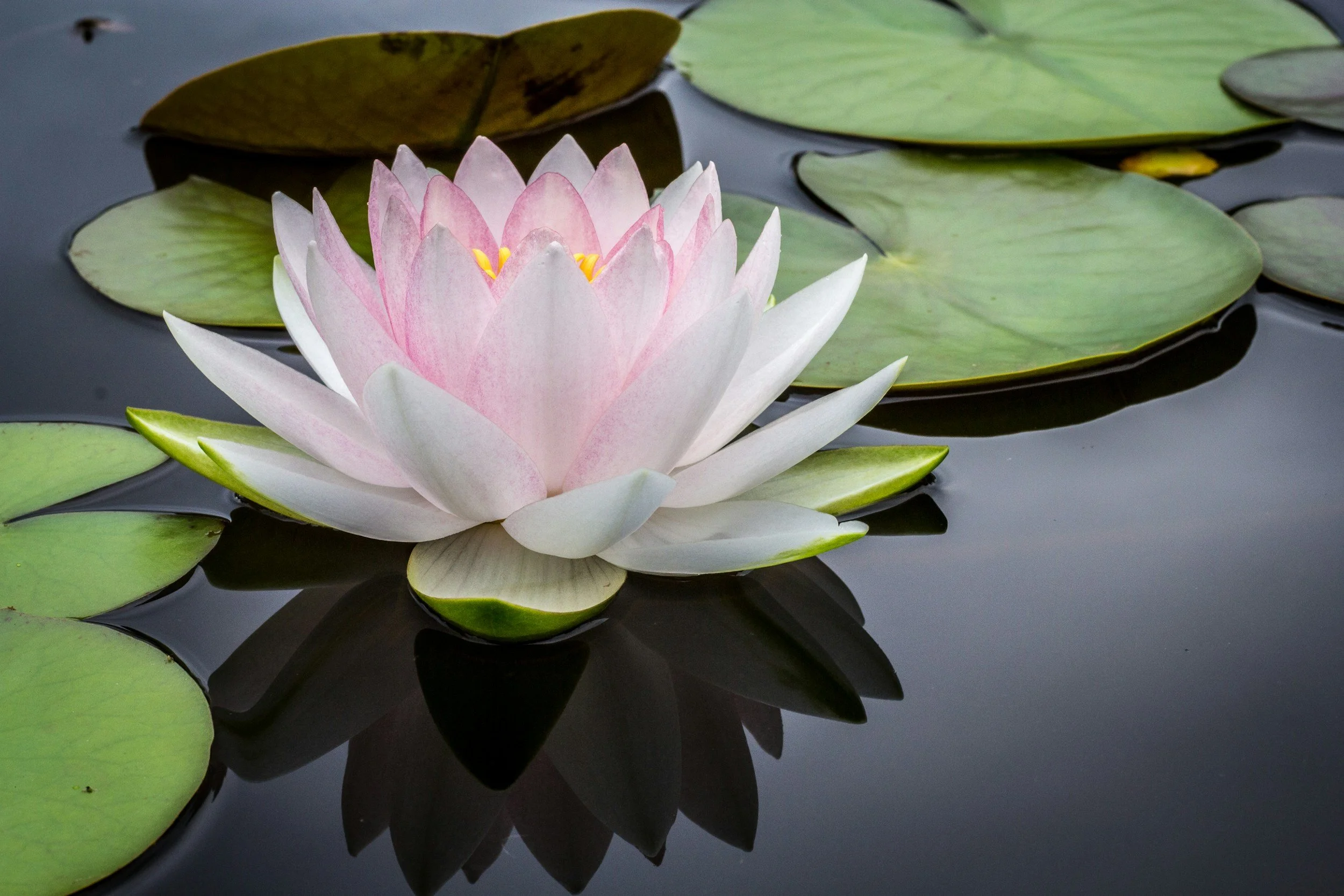
Mindfulness is about noticing small things, like how the shower feels in the morning. You can start your day by getting caught up in the day's thoughts, or you can tune into how the water feels against your skin. If you are mindfully tuned in, you might notice how it feels to be clean, to dry off, to comb your hair, to put on fresh, clean clothes, to brush your teeth, and to enjoy the freshness and newness of each day. You can top this off by noticing how much you enjoy a fresh cup of coffee or your cereal, or you might be thankful for your family, your pets, that you are not in pain today, or not having to struggle as much as you start your day, or just that you are alive and have a day full of opportunities. This can be contrasted with not noticing and taking all of these things for granted, waking up and spending the first hour of your day thinking about everything you need to accomplish, or trying to get ahead on all the thoughts you consider important. It’s up to you to decide how to start your day.
Have a Mindful Cup of Tea


Practicing Healthy Thoughts
What You Practice Grows Stronger. If you practice joy, you become more joyful; if you practice positivity, you become more positive; if you practice complaining and negativity, you become more negative; practice gratitude, and you become more grateful. This is a foundational principle of how the brain works. This is why noticing, awareness, and being conscious of thoughts are so important. We see so that we can remind or TEACH ourselves to practice the skills that will help us grow.
Practicing Gratitude, Empathy, Generosity, Positivity, Being Less Judgmental, More Forgiving, More Growth-Oriented, Non-Striving, Not Resting, Acceptance, and Letting Go will strengthen neural networks associated with positive feelings. Practice makes these attitudes grow stronger and occur more naturally. Remembering and practicing these skills can be challenging. This is where the TEACH model becomes helpful. The strategies section for each area includes a list of specific practices you can gradually build into your routine. The handbook in our store provides forms and templates to help you establish a plan, select skills to develop, identify effective strategies (Daily Practices), and record your progress.
Helpful patterns of thought are like exercises for the brain that build mental strength, just as we exercise our bodies to build physical strength. Healthy mindsets and intentions can become a way of life, changing how you think, feel, and behave. Daily Practices help you develop and strengthen brain states that are peaceful and open to the present moment, as they can be when we are at peace with ourselves and others. As these brain states are strengthened through practice over time, they create lasting changes in your brain. You become more resilient, respond to stress in healthier ways, and find greater enjoyment regardless of your situation in life.
These attitudes improve mood and brain function. These more positive, comforting, reassuring practices activate the relaxed side of our nervous system. Taking care of yourself involves finding natural ways to calm the brain's stress center and activate pathways that promote pleasure, reward, and motivation. These attitudes can be developed into habits that, with practice, create greater well-being and a less stressed brain.
What you seek, you will find. If you focus on problems, you will discover problems. If you focus on solutions, you will find solutions. You will find what you are looking for!