

Anxiety
Understanding Anxiety in Today's World
Anxiety has become the most widespread mental health condition affecting individuals today. Recent estimates suggest that approximately one-third of Americans either currently experience or will experience an anxiety disorder at some point in their lives. This widespread occurrence highlights the importance of understanding the factors that contribute to anxiety and the ways it manifests in daily life.
Global and Personal Factors
Global issues serve as persistent sources of background stress, including social isolation, an increased reliance on technology and digital media, school and community violence, ongoing global conflict, advances in artificial intelligence, concerns about climate change, and sharp political divisions. In addition to these global challenges, personal difficulties add to the burden, underscoring how easily the nervous system can become overwhelmed and open the door for anxiety to become an uninvited guest that refuses to leave.
The Real-World Impact of Anxiety
Teachers lie awake at night, preoccupied with concerns about their students, police officers remain in a constant state of high alert, healthcare workers face chronic overwork and risk their own health to care for others, young parents struggle financially and worry about their children's future, and adolescents are increasingly concerned about their safety and the overall state of the world. The world is changing more rapidly than most people can adjust. We must move beyond the "just relax" clichés to explore the physiological roots and psychological patterns that drive our greatest fears and worries. This section is dedicated to demystifying the complexities of anxiety and providing evidence-based insights to transform anxiety from an overwhelming obstacle into a manageable aspect of the human experience. Whether you’re looking to support a loved one or navigating your own internal storms, in this section, you’ll find the tools and clarity needed to move forward with confidence.











Understanding Anxiety
What Is Anxiety?
Anxiety is a common condition that can sometimes feel overwhelming and lead to unhealthy behaviors. However, it can also be helpful in certain situations. To fully grasp how anxiety can have both positive and negative effects, it is essential to understand its nature and development
How Anxiety Develops in the Nervous System
The nervous system constantly works to maintain a delicate balance, monitoring our internal state and sending signals to organs and glands to keep things stable. When we encounter a real or perceived danger, the nervous system triggers the release of chemicals throughout the body to help us respond. This reaction is experienced as stress. Normally, the nervous system helps us cope with stressors—whether external or internal—so the body can return to balance, or homeostasis. The physiological stress response can be mild or severe depending on the situation.
Real vs. Perceived Threats
A major complication is that we often cannot determine if a threat is real or just perceived. If the threat is genuine, our system adapts and returns to homeostasis, while the fight-or-flight system protects us. But if the perceived danger is based on a prediction error or negative narratives, there is no resolution, leading to chronic, overwhelming stress. The body stays on high alert, unable to recover, and we remain unsure whether to run, hide, or ignore these signals. This ongoing uncertainty keeps stress levels high, which can lead to anxiety. Anxiety is not only a mental state—it becomes a real physical condition with many complexities.
Individual Experiences and Types of Anxiety
Anyone can experience anxiety or panic, but triggers vary from person to person. While the physiological stress response is similar across individuals, anxiety differs based on intensity, biology, environment, and triggers. Feeling safe is crucial for mental and physical health. Anxiety arises when we do not feel safe, but it is more than fear; it is a dysregulated state of the nervous system. Anxiety can be chronic, as in Generalized Anxiety Disorder; specific, as in Social, Performance, or Separation Anxiety; linked to phobias; or triggered by reminders of past trauma, as seen in PTSD.
The Dual Nature of Anxiety
Anxiety can be overwhelming and even debilitating, but it can also be mild or adaptive and beneficial. Some people experience anxiety only in certain situations, while others feel it constantly. Anxiety can be helpful and adaptive if it helps you prepare for a challenging situation.
The Stress Response and Its Benefits
Stress is helpful and necessary in threatening situations. The body's physiological stress response enables us to cope and adapt. Without this system, survival would not be possible. Stress—which may feel like fear or alarm—can be positive when it motivates us to act in beneficial ways. and beneficial in a dangerous or threatening situation.
Chronic Anxiety and Internal Conflict
Anxiety becomes problematic when we cannot calm down after stress. It is a state of constant or high involuntary arousal of the autonomic nervous system. Trying to consciously control the autonomic system—which is not under conscious control—creates conflict between the conscious and unconscious parts of the brain. This pushes the body further out of balance. To restore balance, the brain creates narratives that match the body's dysregulated state, telling us something is wrong or there is an unknown threat. This increases dysregulation and strengthens anxiety.
Expert Insights on Anxiety
Stephen Porges, author of Our Polyvagal World, puts it this way: “While we evolved to be occasional tourists to the state of fear and alarm, some of us have become full-time residents.”
The Role of Narratives in Anxiety
Anxiety is a complex emotion with many perspectives. If we see anxiety as part of our survival system, it becomes clear that it is designed to protect and help us. The main challenge is avoiding being stuck in a state of fear or alarm. Trusting our system, listening, letting go, and moving forward can help us avoid being caught up in anxiety. We cannot always trust our thoughts or emotions; sometimes we experience prediction errors. The narrative we create internally—often separate from real danger—can maintain anxiety. Once anxiety starts, it can sustain itself as the body and mind feed into each other: feeling anxious leads to anxious thoughts, and anxious thoughts reinforce anxious feelings. To break this cycle, both cognitive (top-down) and physical (bottom-up) approaches are needed to synchronize body and mind.
How Biology and Narratives Interact
The relationship between biology and thoughts is complex and deeply intertwined.
When the body enters a state of "fight or flight" or experiences a panic episode, thoughts shift rapidly. Instinctively, the mind starts to believe that something is wrong and attempts to identify the cause of this heightened alertness. This reaction occurs almost instantaneously and can be both powerful and overwhelming. Typically, these thoughts revolve around the idea that something is terribly wrong, which seems to justify and match the body's intense biological response.
As the body begins to recover and the system returns to a more balanced state, thoughts start to settle. The mind begins to consider that things might actually be okay. The activation of the parasympathetic system helps restore balance, but there remains a lingering awareness of the recent anxiety and the false thoughts triggered by the anxiety.
After experiencing a panic attack, it becomes apparent that the associated thoughts were wrong. This realization creates a new level of uncertainty, making it challenging to distinguish between what is true and what is not. Even when attempting to reassure yourself that everything is fine and there is no real cause for worry, doubts persist. The awareness that you might again be mistaken about your well-being adds to this uncertainty, and it becomes extremely difficult to believe with confidence that you are actually safe, even though you are, so you stay in a state of uncertainty.
Ultimately, thoughts can trigger biological changes in the body, and biological states can shape and interfere with thought patterns. This mutual influence highlights the ongoing interplay between the mind and body during episodes of anxiety or panic. This interplay is natural and organic. The way that we cope with anxiety undermines confidence in the very thoughts that are capable of reducing anxiety. Understanding this process can help break the cycle of anxiety, creating more anxiety.
Learning to Live with Anxiety
Dr. David Hanscom takes it a bit further, “We must learn to love anxiety.”
“With our language ability, we possess what I call ‘cognitive consciousness,’ which is the capacity to describe these sensations. Meaning is given to our feelings, generated by these neurochemical reactions that reflect danger and safety.”
“Realistically, we’re always on some degree of alert for trouble, and there can be an endless stream of repetitive unpleasant thoughts. We call them RUTs, which are repetitive, unpleasant thoughts. And with physiology, how your body functions, RUTs can affect every cell in your body.”
Accepting and Managing Anxiety
The paradox of anxiety is that, while it can be terrifying due to intense emotions and thoughts, it is not our enemy—it is part of our design and can even be a friend. The key is not to see anxiety as something to fight or eliminate, as this creates internal conflict and more anxiety. Instead, acknowledge its presence and work to reduce it by uniting body and mind. By listening to our bodies and adjusting our internal narratives, we can learn to live with occasional anxiety. If we resist, try to control, panic, or even push back against anxiety, we create an internal struggle that can take us into our darkest hours.
Prediction Error and Anxiety


How the Brain Predicts and Triggers Anxiety
The brain is constantly working to help you navigate life by making predictions about what actions to take in different circumstances. It forms these predictions based on memories from previous experiences combined with the information it receives from your senses in the present moment. When you experience a high level of anxiety in a particular situation, that experience, or similar ones, become triggers for future anxiety. In these moments, your brain processes sensory cues from the trigger, recalls past discomfort or suffering related to that scenario, and mistakenly predicts that you are facing a threat. This mistaken prediction initiates anxiety. As a result, your body automatically undergoes various physiological changes—such as hormonal shifts and other biological responses—to prepare you for perceived danger. You feel these bodily changes and interpret them as anxiety caused by the situation itself. Over time, you may come to expect anxiety whenever you face that situation, which can lead you to avoid it. However, the anxiety is not just created by the current circumstances or sensory experiences; it is deeply influenced by memories that have become associated with the situation.
The Cycle of False Narratives and Panic
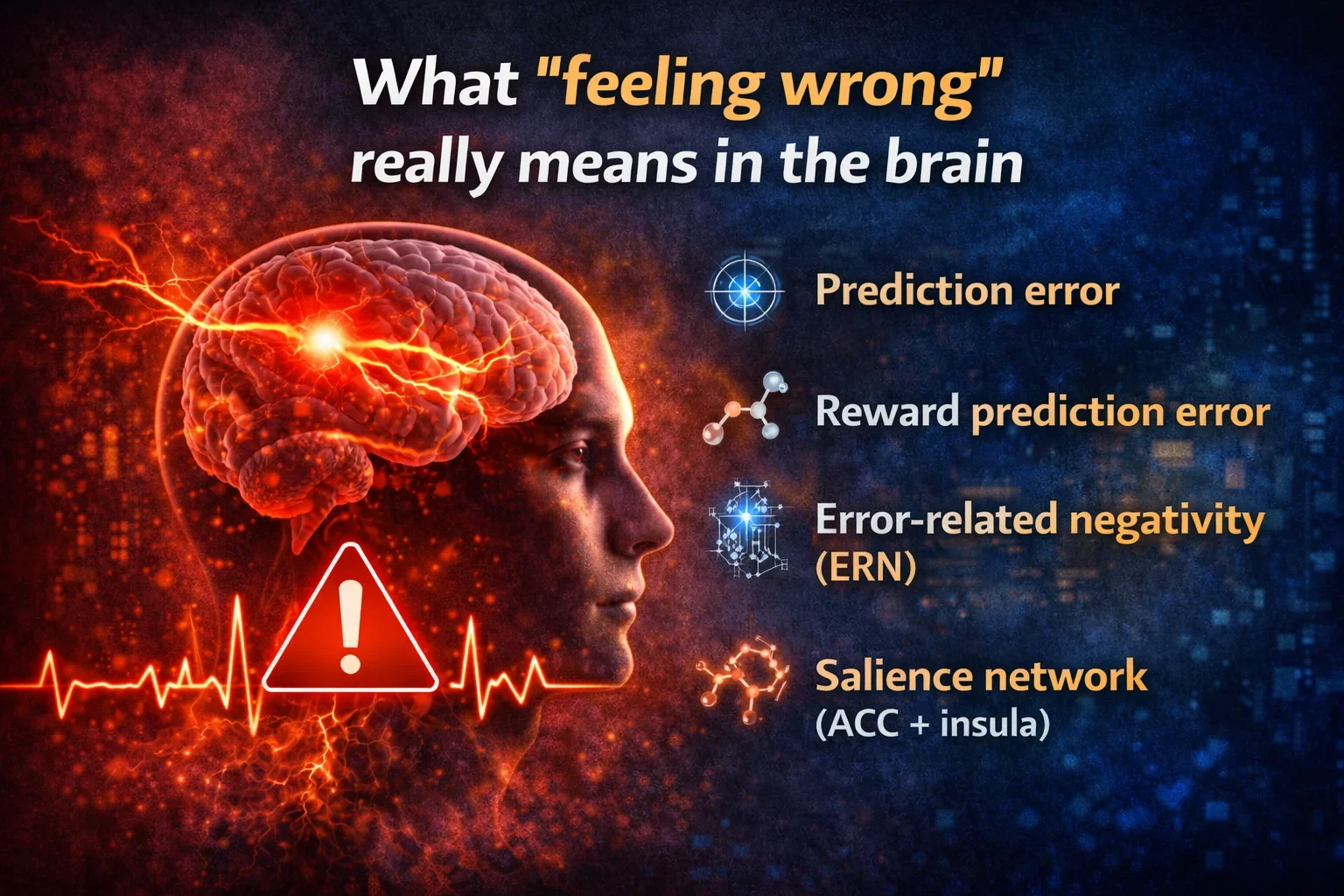
When anxiety arises, even though there is no real threat, your mind may construct a narrative that something is wrong: you might believe you are losing control, going crazy, or that disaster is imminent. This narrative further amplifies your body’s stress response, potentially leading to panic. The central issue here is prediction error—the brain misinterprets sensory data and makes an incorrect prediction, triggering the fight-or-flight response. Recognizing that your brain may be making a false prediction, especially in situations previously linked to anxiety, can help you consciously reduce the anxious reaction.
Overcoming Prediction Error Through Gradual Exposure
By intentionally facing trigger situations while remaining calm and in control, you can retrain your brain to understand that the situation itself is not the problem, and that being in it does not always lead to anxiety. Overcoming prediction error is difficult because encountering a stimulus associated with your fear leads the brain to trigger automatic physiological arousal, and the anxious narrative is hard to avoid. Although the anxious response might feel uncontrollable, you can change the narrative, which, in turn, helps the body settle and reduces nervous system arousal.
Distinguishing Real Threat From False Alarm
The challenge is determining whether your brain’s prediction is accurate. Is there an actual risk, or is your anxiety being driven by past memories that don’t apply to the current situation? If you can remain calm and assess the situation, you may discover there is no true danger, and your anxiety will decrease. If a real threat exists, it will reveal itself and you will address it as needed; if not, your anxiety is the result of a false alarm caused by prediction error and an inaccurate narrative. Regardless, experiencing a prolonged heightened state of nervous system arousal is unsustainable and can have serious consequences for your health.