

Sleep and Rest
AMAZING BREAKTHROUGH!!
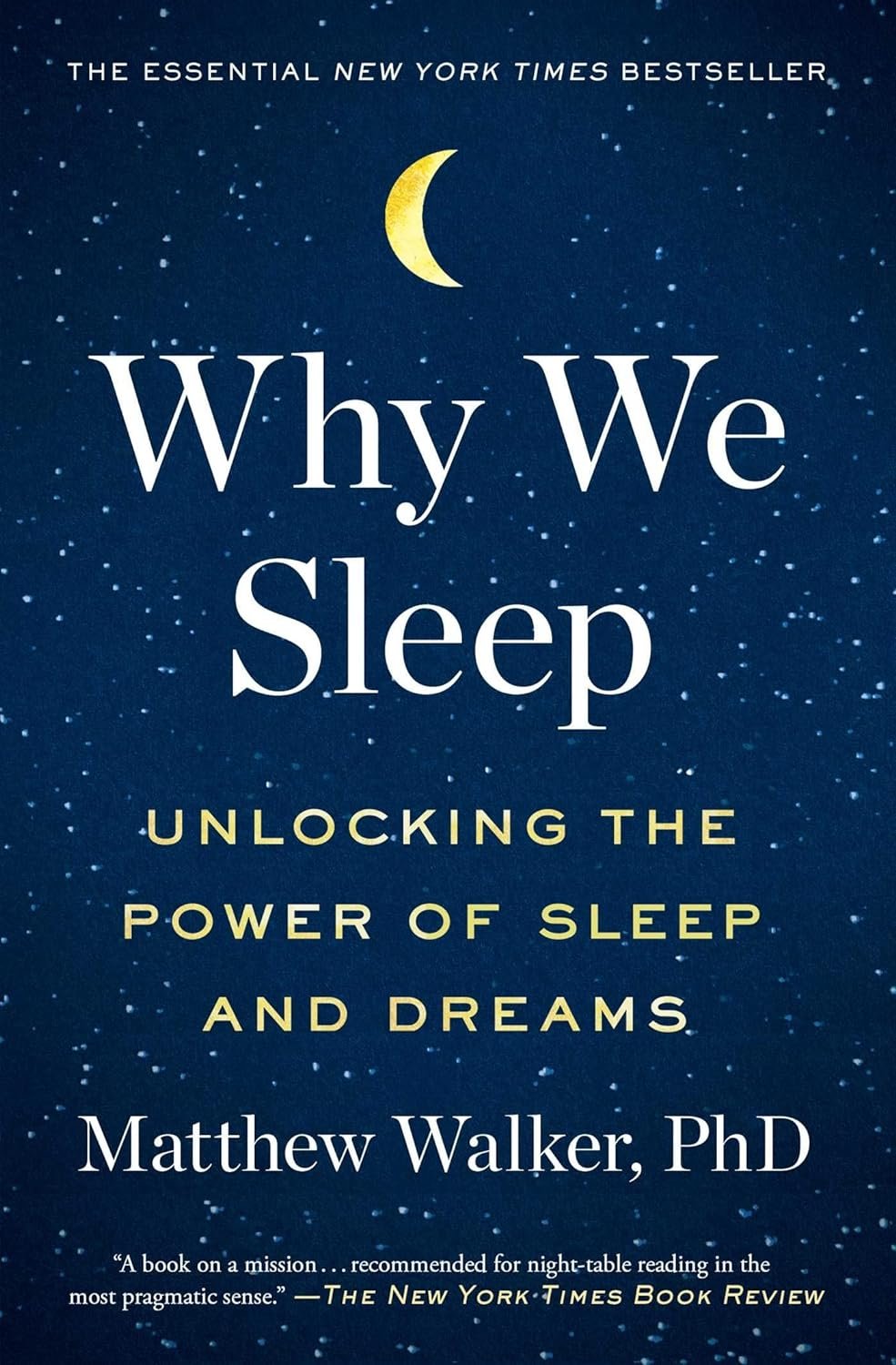
Scientists have discovered a revolutionary new treatment that makes you live longer. It enhances your memory and makes you more creative. It makes you more attractive. It keeps you slim and lowers food cravings. It protects you from cancer and dementia. It wards off colds and the flu. It lowers your risk of heart attacks and stroke, not to mention diabetes. You will feel happier, less depressed, and less anxious. Are you interested? Matthew Walker, PhD, WHY WE SLEEP
Introduction to Sleep
Sleep is critical to our health and well-being. This is when our body takes out the trash and cleans and organizes the house. This is also when we put helpful information into long-term storage, repair cells, fight infections, and restore energy levels. Sleep is like a reset to clear out waste, tune your body, and help you get ready for another day. Sleep is obviously essential and helps keep our body going. When we take sleep health seriously, our bodies will benefit and will be able to carry us further in life. Here are a few strategies that will strengthen your sleep health.
Tired all the time?
Strategy #1 Get Restorative Rest
Strategy #2 Try Non-Sleep Deep Rest (NSDR) Protocols
Strategy #3 Manage Stimulants and Depressants During the Day
Strategy #4 Establish a Consistent Routine, Particularly in the Evening
Strategy #5 Nutrition and Sleep
Strategy #6 The Mechanics of the Sleep Environment
Special Strategies for Sleep

Strategy #1 Get Restorative Rest
Better rest impacts every aspect of our lives. It helps with our careers, relationships, and physical and mental health. And you take better care of yourself when you feel better. The real challenge is to go beyond just getting a certain amount of sleep and to discover how good it can be when we're really rested. What could happen to our relationships, our creativity, or our purpose in life? We need to be able to pour from a full cup. Having the energy to confront the problems we all face in life comes from learning how to rest.
There is a difference between sleep and rest. Sleep is a type of rest. Rest has several different components. In the book Sacred Rest, Dr. Saundra Dalton Smith describes seven types of rest. These include Physical, Mental, Spiritual, Emotional, Social, Sensory, and Creative.
Rest is about getting to a quiet space in your mind. Rest is about restoring the one thing that you need most, the thing that's really affecting how well you are enjoying your life, your relationships, and your world. Many people don't know what rest is.
Physical rest has two components: an active and a passive component. The Active component is sleep or napping, but the Passive type of rest includes activities that help your muscles, like relaxing or stretching, which help your circulation and other stress reduction skills. A body that is painful, tight, or tense will not get as much high-quality sleep as a body stretched or relaxed. Physical rest is enhanced by exercise and physical activity that will improve blood circulation and help the body move into a more rested state. Most experts recommend at least twenty minutes of movement four or five days a week. This might include yoga, pilates, resistance training, walking, swimming, or intervals during the workday dedicated to some movement, even if it’s just getting up from a chair and walking around the house or office. Keep your mind and body moving during the day and keep naps down to under 30 minutes.
Mental rest refers to clearing your mental space and having clarity, focus, and concentration. When you lay down to sleep at night. And your mind is racing. You think of all the things you've done during the day of conversations that you've had or things that bother you. Some people call this busy brain syndrome. When you manage that and clear your mind, you can get to a quiet place; cerebrally, then you sleep better. When you do a to-do list, jot down a note. It's like a brain dump, so you don't have to keep trying to remember or think about it, which drains mental energy.
Spiritual rest is different; we all must feel that our life has a purpose. That it has a human or “less than all” element to it. Our humanity is compassion, connecting with people and those things bigger than ourselves and humanity in general.
Emotional rest is to let emotions out. It Is sharing what we felt about our day. Not the details. The details can be more like emotional trauma. The important thing is sharing how you feel. Spending time eye to eye. It takes a bit of courage to say how you are feeling right now.
Social rest is being around uplifting and life-giving people who are motivational and feed you. Some of our relationships pull energy away from us socially but can also pour back energy. It doesn't matter how much you love them. You have to be mindful of what relationships pour back into you and fill that bucket that gets poured out daily when dealing with the kids, customers, clients, or however you're pouring out social energy. If you need social rest and restoration, eight hours of sleep may not fulfill your need. Being around lots of people and surface-level conversation is extremely draining for some people. For other, more extroverted people, this can be socially fulfilling.
Sensory deficits are when people experience sensory overload syndrome. You become sensory overwhelmed throughout your day. You may find that you become more agitated as the day goes on, and toward the end of the day, what you need most is a low-sensory environment. Sensory rest is coping with our surroundings and being mindful of the sensory input you allow into your brain. Whether it's the gadgets you're using, the lights, the sounds, or the office space where you work. It's how many notifications you have on your phone. All those sensory inputs affect us and affect our behavior.
Creative rest. It is allowing yourself to be inspired. To find moments in the day. When you imagine desired and exciting or interesting outcomes, creative energy is expended when you think outside the box, problem-solve, or are innovative. Many people experience creative rest around bodies of water, in nature, or in the natural beauty of things like art, music, dance, and theater. These things. Pour back into us so we don't experience those rest deficits.
Sleep is a manifestation of what has been happening or not happening during the day. Our habits and routines during the day impact what happens at night. You cannot sleep well when experiencing a rest deficit, so taking care of yourself during the day and getting needed rest will set you up for a restorative sleep.
Visit our strategies sections for tips and techniques to help you manage Thoughts, Emotions, Attention, Connections, and Health.

Strategy #2 Try Non-Sleep Deep Rest (NSDR) Protocols
NSDR includes strategies like meditation, yoga nidra, and hypnosis that support better brain and body health. This type of rest is deliberate and directed toward a state of deep relaxation, which is very beneficial. Hypnosis, naps, or yoga nidra is unique because it's straightforward, allowing you to guide your brain toward a particular outcome. These strategies increase plasticity and open pathways that allow you to change your brain in helpful ways. There are multiple videos on YouTube about this, but Dr. Andrew Huberman has an excellent 10-minute NDSR protocol.
Keep your stress level under control and try not to get overtired before you sleep. This will cause the release of stress hormones that will interfere with sleep and lead to tossing and turning for hours and disrupted sleep habits that might shake your confidence in your ability to go to sleep.

Strategy #3 Manage Stimulants and Depressants During the Day
Be careful about the products you use to stay alert or focused during the day. Caffeine helps you get going in the morning, but it has a 6-hour half-life, which means that about half of the caffeine you take in is still in your system after six hours, or it will take 10 to 12 hours to get most of it out of your system. It is better to avoid any stimulants after noon. Using high-caffeine products like 5-hour energy, high-caffeine energy drinks, or energy supplements can interfere with sleep. The half-life of nicotine is 2 hours, while the half-life of cotinine is approximately 16 hours (Cotinine is a metabolite of nicotine and is typically used as a biomarker for exposure to tobacco smoke). Certain medications like Excedrin or stimulants used to treat ADHD or Narcolepsy can also interfere with sleep. Be careful about what you take into your body and check labels or call your physician’s office to determine if products might interfere with sleep. Depressants like Alcohol also interfere with sleep by reducing the amount of REM sleep. Antidepressants that block the reuptake of serotonin can also have a negative effect on REM sleep.




Strategy #4: Establish a Consistent Routine, Particularly in the Evening
Try to get up and go to bed at roughly the same time every day. Even if you stay up late, try to get up at the same time. Start planning for a good night's sleep as soon as you wake up in the morning; develop healthy winding-down and gearing-up habits. Your body will learn these and adapt. Pay careful attention as you go through the day to engage in more active mental and physical activities early, and practice calming down as you move into your evening routines. In the early morning, a lot of light exposure is good. Go outside if possible, walk early, or expose yourself to natural light in the morning to stimulate the release of cortisol and adrenaline and regulate melatonin, giving you more energy and a better mood.
The evening routine should gradually decrease stimulation. You might try an after-dinner walk without your phone. Remember to notice how you might need rest (Physical, Mental, Spiritual, Emotional, Social, Sensory, and Creative) and take care of these as the evening routine unfolds. If needed, do a guided meditation or take a sensory reprieve from the world. Our body constantly tries to help us by letting us know when something doesn't feel right. It's important for us to know when we need to take action to help us deal with emotions or social or sensory issues that are left over from the day. Early in the evening is a good time to take walks, breathe, commune with pets or a person, or nature as you try to relax into the evening. Different people have different types of needs for rest. For example, music is very resting and relaxing for some, but for others, jogging might help with physical rest, but it will not help with mental or creative depletion. Do things that might inspire or restore you as you get your brain ready for sleep. Talking with someone or dealing with an issue at this time of day might keep you from tossing and turning at night. Getting five to thirty minutes of sunlight in the late evening hours helps maintain an appropriate level of the sleep hormone melatonin, which helps to optimize sleep and mood.
Movies or any stimulating screen time should end at least an hour before bedtime. Eating or exercising should end a few hours before bedtime. The last hour might include listening to quiet, soothing music, reading a book, or listening to a meditation or sleep app like Calm, Headspace, or Ten % Happier. Some people use sleepy-time tea, such as Chamomile. Stretching, breathing, or finding a quiet place for prayer or meditation for five to ten minutes before sleep might help. When you relax and feel safe, adrenaline and cortisol levels decrease, which helps you fall asleep. Going to bed earlier can reduce waking up in the middle of the night by promoting an earlier release of melatonin.

Strategy #5 Nutrition and Sleep
A dinner rich in starchy carbohydrates can support rest and deep sleep by increasing serotonin levels. Refined sugars can trigger sugar cravings and disrupt metabolism. Carbohydrates increase serotonin levels in the brain, which are necessary for a good night's sleep. Fasting and low-carb diets can interfere with sleep. At some point during the day, ingesting starchy carbohydrates for relaxation is considered a scientifically rational strategy to facilitate sleep.


Strategy #6 The Mechanics of the Sleep Environment
Remove unnecessary devices or noises and make your bedroom a sleep sanctuary. Keep the room temperature cool (most people recommend 68-70 degrees). Gradually reduce the light as you get ready to sleep, and when you go to sleep, try to keep the room dark and quiet, like a cave. A plush carpet in the bedroom might help reduce noise, but some people prefer a noise machine or fan drone. A warm shower before bed is associated with a shorter time getting to sleep (note: cold showers increase dopamine, which might keep you up). Exposing the palms, face, and feet to cool air also helps lower body temperature, which can aid sleep onset. Consistent darkness will stimulate the release of melatonin, which signals the body to sleep. Any artificial light exposure during the night will suppress melatonin. Blue light interferes with sleep, so limit digital or screen time later in the evening or use a night or low-level screen setting. Some people use blue-light-blocking glasses to reduce light exposure when working late. It is better to keep cell phones or other distracting electronics out of the bedroom, but not always practical. Be aware that they can disrupt sleep patterns and be more problematic than helpful. Using a mask to keep light out of your eyes can be helpful.
Waking Up During the Night:
Our body goes through sleep cycles during the night. We enter deeper levels of sleep, then regain consciousness or partially wake up, and then go back into deeper sleep. The deepest cycles occur around three or four a.m. (unless you work a night shift). This is when your body temperature reaches the lowest point, and your brain wave activity is slowest, giving you the most helpful sleep. It is natural to wake up at times during the night as you transition through sleep cycles. If you do not activate the thinking, conscious brain or expose your eyes to bright light, your body will typically go back to sleep within a few minutes. Trust your body and let it be in charge of this process. Your body will tell you when you are getting enough sleep. If you try to take charge of your sleep or another area of your life and start thinking or worrying about things, you will disrupt your natural rhythms, and it may be difficult to get back to sleep.

Special Strategies for Sleep:
If you are having a hard time getting to sleep, here are some special strategies that people have shared:
Keep a journal next to your bed. Before you sleep, write down something about the day you are grateful for or three good things that happened during the day. Savor these things as you drift into sleep. You can also use the journal if you think of something you want to remember or do later, write it down, and let it go.
If you have difficulty falling asleep and are bothered by complex thoughts, try not to get upset with yourself for thinking too much; this increases stress hormones and further interferes with sleep. Be aware that you are having difficulty, but tell yourself you are fine, you will get through the next day, and try to let the thoughts pass. Some people do fine on as few as four hours per night. Your body will tell you when you are getting enough sleep.
If your thoughts bother you, some people try to think of something less stimulating or focus their attention on a specific topic to avoid distressing thoughts. Be kind to yourself and practice self-compassion when you have difficulty getting to sleep; tell yourself this is normal and everyone has a difficult time occasionally, and let these thoughts pass like clouds in the sky. A meditation practice can help you learn how to notice thoughts and let them go without getting caught up in them.
Cognitive Shuffling:
This is a neat strategy. Once you go to bed, pick a word that doesn’t carry much meaning to you and is five to 12 letters long. “The word should be emotionally neutral, so not something tied to stress or strong feelings,” says Patricia B. Pedreira, a health psychologist and postdoctoral associate at Duke University Medical Center who specializes in behavioral sleep medicine. “We want to avoid words like money or deadline or anything that might trigger worry chains.” Some of her favorites: blanket, garden, bedtime, and kitchen. With your word in mind, work through it letter by letter, generating as many unrelated words as you can for each letter. For example, if you choose bedtime, your shuffling might look like this: B: butterfly, basket, bagel. E: envelope, Egypt, emerald. (In practice, you’d keep going until you ran out of ideas.) “The key is keeping them unrelated,” Pedreira says. “If your brain starts making connections or building a story, it defeats the purpose.”
Each time you name a new word, spend a few moments visualizing it. If you landed on the word goat for G, for example, “you’d briefly visualize the goat,” Pedreira says. Hold the image for a few seconds, and then move on to the next letter. Ideally, you won’t finish the whole word—you’ll have drifted off to dreamland. If you do make it to the end of your word still wide awake, just pick another one and start again.
Why Cognitive Shuffling Works
When your brain is busy reliving or processing what happened during the day, those thoughts can keep you stuck in an alert, problem-solving mode. “Your job is to change the channel and refocus on something that’s more likely to help you fall asleep,” says Nina Kaiser, a psychologist in San Francisco who teaches cognitive shuffling to the kids and adults she treats.
The technique also gives you something to do besides tossing and turning. “It provides an alternative to lying in bed ruminating,” Pedreira says.
There’s a neurological reason it works, too. Your waking brain is dominated by faster brain waves associated with focused, attentive thinking; as you fall asleep, those give way to slower, more meandering ones. “It’s a gentle shifting into a more loose, gentle, kind of random-flowing state,” says Sarah Gray, a psychologist and instructor at Harvard Medical School who specializes in cognitive behavioral therapy for insomnia. Cognitive shuffling helps your brain make that downshift.
That’s also why the technique tends to work better than counting sheep, Gray says. Counting is so monotonous that the mind quickly loses interest, leaving room for the day’s stressors to come rushing back. Cognitive shuffling, by contrast, gives the brain just enough to do without revving it up.
WHO WILL BENEFIT MOST
Cognitive shuffling works best for people who have trouble falling asleep due to rumination and racing thoughts. “I see this a lot in people who are otherwise healthy sleepers, but they bring stress to bed with them,” Pedreira says.
It’s not a fix for everything that disrupts sleep. Cognitive shuffling won’t address underlying sleep disorders, which need medical management. It also tends not to work as well for people who find visualization more alerting rather than relaxing, Pedreira says.
If you don’t drift off in the first few minutes, don’t panic or start watching the clock. “It’s actually very normal to be awake and have a bit of an active brain for 10 to 15 minutes,” Gray says. The trouble starts when people fixate on not falling asleep instantly, because the worry itself keeps them up. That’s exactly the window cognitive shuffling is built for: something low-key to do while your brain settles, instead of one more thing to stress about.
Focus your attention on comfortable feelings in your body or how good the bed feels. Try not to review the day's events. Concentrate on your intention to go to sleep and on how it feels to lie down and rest.
Sleeplessness is often caused by internal self-talk, a kind of mental chatter, which can interfere with relaxing your body. The Headway website has an entire section on strategies for dealing with unhelpful thoughts. It is not advisable to tackle this when you are trying to sleep, but many tips and techniques might help if you look into these strategies at other times.
Be patient with yourself. Sleep patterns are habitual, so you might need to work consistently on good sleep habits and savor any small signs of progress while ignoring setbacks. Watch for anxiety or feelings of anger or fear, which would make sleep unlikely or impossible. If you do struggle with anxiety/fear or resentment/anger, discuss these with a therapist who can help you work out a more stress-free view of life.
One person shared a finger-tapping strategy. She tapped her index finger on the bed slowly and repetitively when she had difficulty sleeping. This helped her let go of disturbing thoughts. Other people have shared a strategy of naming things in the environment. If you are lying in bed and cannot sleep, you might name three things in the room. Focus on these three things for three breaths each, then start over, maintaining deep, focused attention on each item and relating them to your intention to fall asleep. Some people recommend counting your breaths from 1 to 4, then starting again with blocks of 4 breaths. Others try to visualize the numbers. Everyone is different; try to find a strategy that works for you.
Sleep Positions and Their Effects
There is ongoing debate about the most beneficial sleep position. Some proponents believe that sleeping on your left side aids digestion. This perspective is influenced by basic anatomy, as the stomach is located on the left side of the body, and its outlet, the pylorus, tilts slightly to the right to connect with the small intestine. Some evidence indicates that sleeping on the left side may help reduce acid reflux compared to sleeping on the right side, as this position can prevent stomach acid from rising into the esophagus. For individuals experiencing reflux or heartburn, trying the left-side position may be worthwhile.
However, digestion occurs regardless of sleep position, so unless you have a specific digestive issue such as reflux, the way you sleep likely does not have a significant impact.
Back Sleeping
Sleeping on your back is sometimes recommended to relieve pressure on the neck and lower back. Nevertheless, this position can increase the risk of snoring or sleep apnea by allowing the tongue to partially block the airway.
Side Sleeping
Side sleeping is the most common position and can help reduce snoring and sleep apnea by keeping the airways more open. Pregnant women are often advised to sleep on their left side to improve blood flow to the baby and reduce pressure on the liver, though sleeping on the right side is generally acceptable as well.
If you experience back or pelvic pain—especially during pregnancy—sleeping on your side with a pillow between your knees can help ease pressure on the lower back.
Finding Your Best Sleep Position
Ultimately, there is no universally optimal sleep position. While left-side sleeping may offer benefits for those with reflux or during pregnancy, most people should prioritize comfort, spinal support, and overall sleep quality, regardless of position. Realistically, no matter how intentional you are with your bedtime posture, you may find yourself waking up in an entirely different position. Please send us your suggestions.