
Understanding Stress and Anxiety


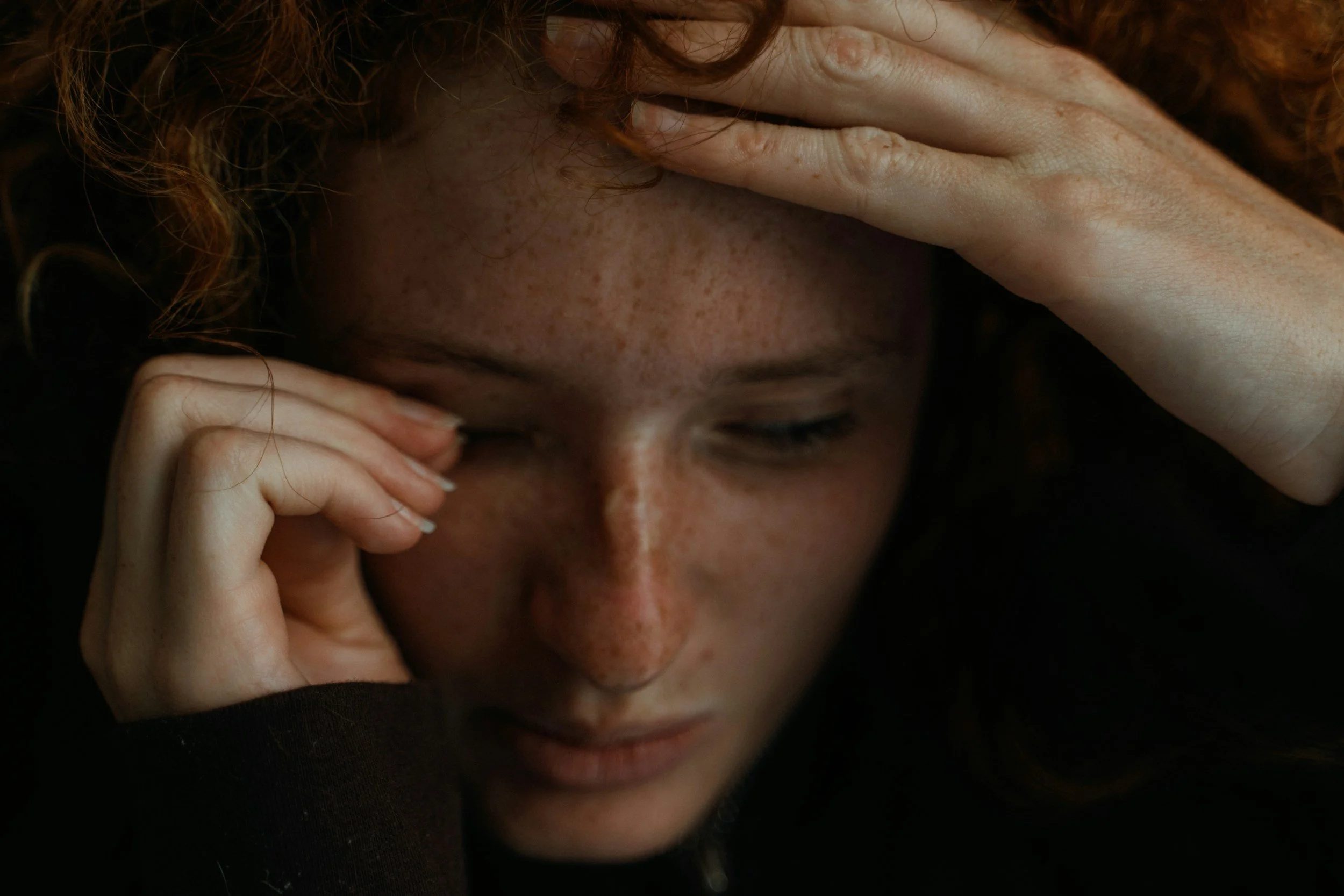




Stress vs. Anxiety
Most people are familiar with the feeling of stress, which is often experienced in the body as tension or discomfort. While stress is commonly mistaken for anxiety, they are distinct concepts. Everyone experiences stress, but not everyone experiences anxiety. However, when stress becomes excessive, it can lead to anxiety. To better understand these conditions, it is helpful to examine their differences and similarities.
What Is Stress?
Stress is a normal response that occurs when we are threatened, in danger, or confronted with a situation we perceive as challenging or overwhelming. It is not inherently problematic; rather, it acts as the body's natural defense mechanism. Experiencing a reasonable level of stress is healthy and can be beneficial, motivating us to take action and helping us manage difficult situations.
Stress can take many forms and arise from both external and internal factors. External sources include unexpected financial issues, changes in relationships or jobs, adverse weather, conflicts with friends, and looming deadlines, as a few examples. Internal causes come from the narratives we create about our circumstances, negative thoughts, and physical discomfort, such as low blood sugar, allergies, fatigue, pain, toxins in the body, or medical conditions. Some people refer to stress originating from internal conditions as “false anxiety” because the stress response is considered a normal reaction in these cases. Nonetheless, these internal states can prompt anxious thoughts, which may trigger anxiety.
When a person possesses adequate skills to cope with stress, it usually dissipates, and life returns to normal.
What Is Anxiety?
Anxiety is an internal condition that develops gradually. The body's defense system becomes hyperaroused by excessive worry or fear, stemming from real or imagined threats. Factors such as trauma or intense stress can contribute to anxiety, but inadequate coping mechanisms and the personal meaning assigned to these experiences are also critical contributors. Anxiety is primarily associated with uncertainty about what might occur in the future, rather than concerns about the present. The brain often attempts to predict future outcomes based on past experiences. As Justin Brewer explains in Unwinding Anxiety,
“Anxiety is born when the prefrontal cortex doesn't have enough information to predict the future accurately.”
When information is lacking, the prefrontal cortex (PFC) can generate countless scenarios of what may happen and how to respond, leading to feelings of nervousness about the future. The PFC loses its grip on reason and logic when the emotional regions of the brain take over, creating conditions for panic. Anxiety is fueled by questioning thoughts, fears, and an overactive imagination, and is often triggered by real environmental or internal events. The intensity of anxiety can vary from mildly challenging to highly uncomfortable physiological states of hyperarousal.
Shared Characteristics
Stress and anxiety have many physiological similarities, including irregular or increased heart rate, changes in breathing, difficulty concentrating, digestive problems, trouble sleeping, fatigue, excessive sweating, restlessness, mood changes, muscle tension or pain, feelings of uneasiness, and headaches.
Anxiety as an Internal Threat
For individuals with an anxiety condition, the response can be triggered automatically even in the absence of an external threat; the perceived threat originates internally.
When a person has an anxiety condition, it can be triggered automatically, in the absence of an external threat; the threat is generated internally. Anxiety is linked to an acute biological stress response, which can perpetuate itself. We play a role when we react to the biological stress response and interpret or make meaning out of events. For example, a person might have a natural ache or pain. For various reasons, they fall into a pattern of worry and rumination, a repetitive internal thought (RUT) — that something terrible is wrong. This perception or story activates the body's defense systems, producing feelings similar to those experienced if the worry were true. The brain and the body attempt to restore homeostasis, but we are out of hormonal balance, and equilibrium is not possible at that moment.
Differences Between Stress and Anxiety
Although stress and anxiety are related, they are fundamentally different. Stress is common and adaptive, helping us respond to challenges. Anxiety, on the other hand, can be all over the place, chronic, overwhelming, or occasionally problematic. Physiological stress or “false anxiety” may serve as a warning signal from the body, which can be helpful. Clinical anxiety is a physical change in a person’s nervous system, which results in the person quickly and more easily entering into or getting stuck in highly activated states of high physiological arousal.
Triggers and Narratives
The autonomic nervous system responds unconsciously to perceived threats, whether they are real or imagined. These responses can be prompted by triggers linked to previous stressful or traumatic experiences, such as thoughts, sounds, smells, places, scenes from movies or TV, being in crowds, specific times, or even physical sensations. The narrative that accompanies anxiety is negative, suggesting a threat or that something is wrong, something bad is happening or will happen, or that the person is losing control or unable to recover from a mistake. Such narratives activate the body's defense systems, leading to fight, flight, or immobilization responses. The meaning a person assigns to these episodes and triggers can intensify feelings of threat. Unless there is a real threat, the most accurate narrative is that you are experiencing anxiety; the nervous system is responding automatically to learned triggers associated with previous threats.

Comfort Vs. Panic Zones

Stepping outside your daily routine is often described as a journey through three distinct psychological states. Think of them as concentric circles: the further you move from the center, the higher the stakes (and the potential rewards).
1. The Comfort Zone: "The Safe Harbor" This is your baseline. It’s defined by familiarity, safety, and low stress. While it feels good to be here, it’s a place of stagnation.
What it feels like: Secure, relaxed, and in control.
The upside: It allows for recovery and energy conservation.
The downside: No new skills are learned, and your horizons remain fixed.
Motto: "I know exactly what to expect."
2. The Growth Zone: "The Sweet Spot" Also known as the "Learning Zone," this is where the magic happens. You are stretched beyond your current abilities, but not to the point of breaking. This is where you acquire new skills and expand your boundaries. This is where you achieve a state FLOW.
What it feels like: Slightly nervous but focused; "good" stress (eustress).
The upside: Increased confidence, new perspectives, and personal development.
The goal: To stay here long enough that your "Growth Zone" eventually becomes your new, larger "Comfort Zone."
Motto: "This is a challenge, but I can handle it."
3. The Panic Zone: "The Red Line" If you jump too far too fast, you land here. The stress becomes overwhelming, and your brain’s "fight or flight" response kicks in, shutting down the ability to learn.
What it feels like: High anxiety, paralysis, or a sense of being "out of your depth."
The upside: Very little—spending too much time here leads to burnout or trauma.
The downside: You may retreat so far back into your Comfort Zone that you become afraid to try again.
Motto: "I am completely overwhelmed."
How Anxiety Builds and Strengthens:
Anxious people often read into or make meaning of events that may be coincidental. This is usually a form of catastrophizing or overthinking. A person struggling with anxiety might notice a slight pain in their body, a strange feeling in the stomach, a slight from a friend, or they might have a very distressing thought. They begin to worry or ruminate, ‘What does this mean? Or, why did this happen?” They create a story that something terrible is going to happen. They wonder if something is wrong with them or if something terrible is happening, and their anxiety causes a deep gut-level feeling that something is off. They look for an explanation, thoughts spiral, they must have done something wrong, bad things happen, things do not work out …!!!’ The person becomes miserable because of a simple ache or pain.
When the same thing happens to someone not prone to anxiety, they might blow it off. “Well, the person who snubbed me is in a mood.” Oh, well, the pain is nothing; I must have slept wrong, and they go on to think about different things. They don’t make meaning out of a minor irritation. The less anxious person does not experience the uneasy feeling and is not driven to interpret or try to make meaning out of the situation; they think realistically, ‘Life is difficult sometimes’ and accept that you can’t know what is happening with others, or we all have aches and pains.
Either mindset may have a grain of truth. Still, if you have a history of trauma or past negative and stressful experiences, then you are more prone to negatively interpret, need control, or make meaning of things, and you feed the anxiety. If you borrow from the non-anxious and ignore the need to figure things out, stop overthinking the situation, and trust your body, you are less likely to create a false narrative. Being in a state of anxiety increases the chances that you will generate a negative narrative, which feeds the anxiety, and it builds up over time.
Letting go and not trying to create meaning or overthink situations will reduce fear and arousal. When something triggers an automatic fear or threat reaction, determining its meaning and cause is unnecessary. Instead, recognize that you have anxiety, which causes strong reactions, and try to let go. Say to yourself, ‘That doesn’t mean anything. I think it does, but thoughts are just thoughts. It is just a scary feeling, and it will soon pass. Become aware of your tendency to overly interpret or make meaning out of scary feelings, and challenge your thoughts and feelings. When you say, ‘I don’t know what that means,’ It may not mean anything. It may just be a random feeling.’ You may feel a little vulnerable or exposed, but over time, you learn to be comfortable with a bit of discomfort, which brings anxiety down to a point where you can feel safe and learn to live with mild anxiety. Choose to drop the habit of ‘figuring out what things mean.’ Don’t let your mind dwell on that process. Tell yourself, “It doesn’t help to think about that.” After you try this for a few weeks, if you are more anxious than ever, you can go back to figuring out what everything means.
How a person responds to stress or anxiety is shaped by several factors, including genetics, environment, coping skills, and the intensity of their experiences. While genetics and environmental influences are beyond one’s control, individuals can strengthen their coping skills and deepen their understanding of the nervous system. By learning how the nervous system responds to stress, people can practice methods to restore balance when they feel overwhelmed. This may involve calming the nervous system, questioning the thoughts or narratives that arise during stressful moments, and intentionally shifting those narratives in a positive direction.