

Understanding Mood States, Traits, and Emotions
Distinguishing Mood Traits from Mood States
The Brain Constantly Rewires Itself
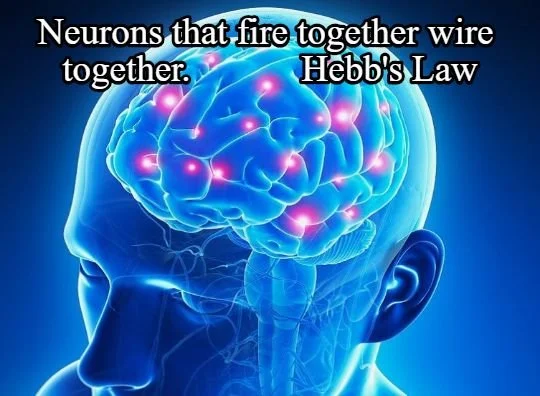
There is an important distinction between mood traits and your current emotional state. Over time, consistently experiencing positive emotions helps build personal resources and enhances overall well-being. In contrast, frequent negative emotion can lead to the development of negative mood traits. This process is reflected in the way our brains work: neurons that fire together wire together. Patterns of positive or negative mood states become familiar neural networks, which shape how we perceive the world and influence our personality traits.
Emotions Are Specific To The Situation

Our current feelings are not isolated; they are interpreted in relation to our past experiences and our expectations for the future. When we encounter a familiar situation—a trigger—we often recall the emotion we felt before and the story or label we attached to it. Because these patterns tend to recur, emotions can become more persistent, affecting our overall mood more strongly.
Building Happiness and Joy

Simply put, experiencing happy, grateful, or joyful moments daily strengthens and expands positive neural networks, leading to more positive mood traits. Unfortunately, negative mood states operate similarly, reinforcing negative traits that can linger and diminish our sense of joy. At times, it may be difficult to feel happy or positive due to external circumstances or challenges in letting go; however, life presents us with choices, and we always have the opportunity to decide how we respond.
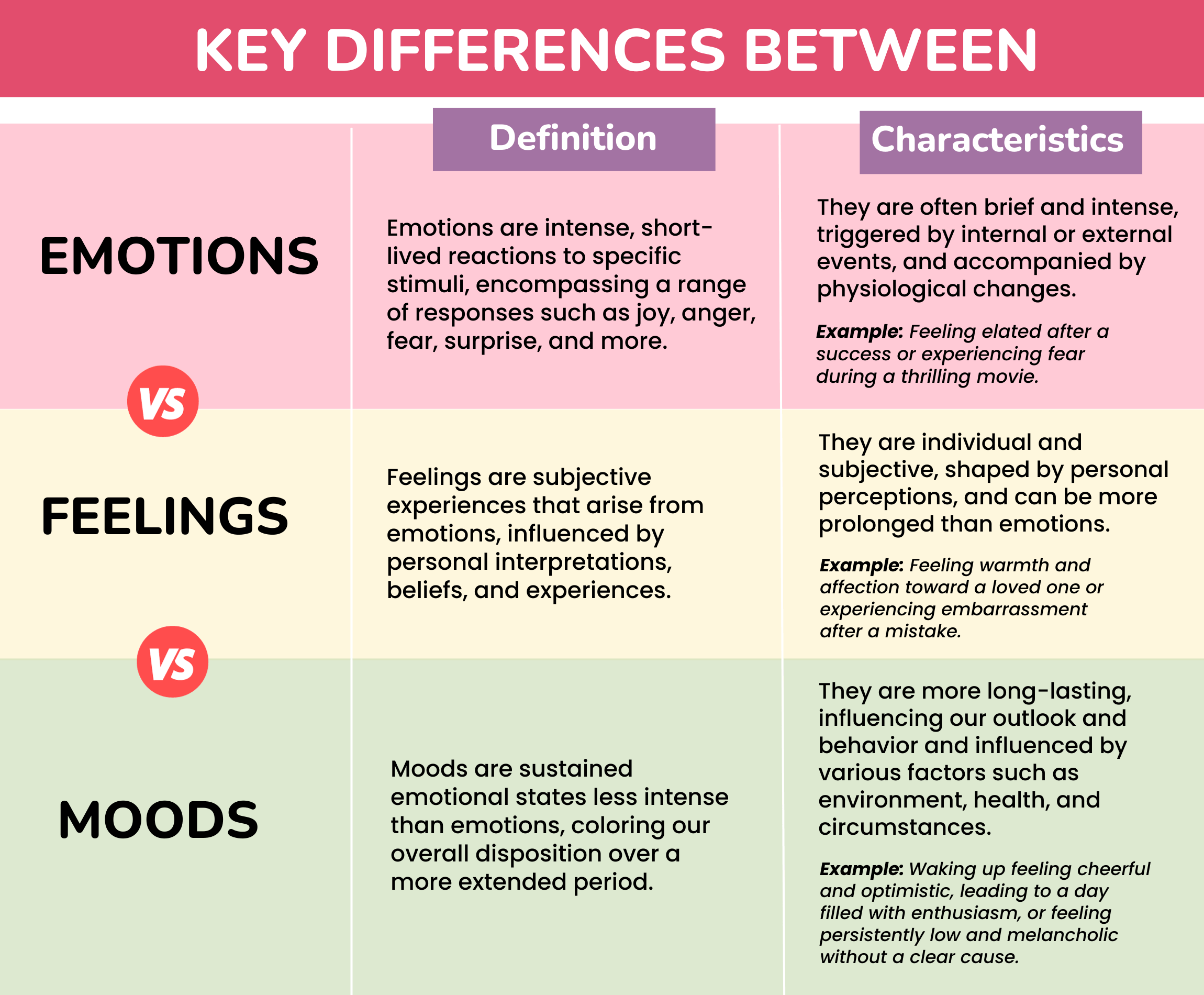
Building positive emotions is an active process that involves practicing helpful strategies each day. By cultivating positive emotions daily, we support a more positive overall mood, which in turn fosters even more positive emotions, leading to positive traits and creating a beneficial cycle.
If you are looking to improve your mood, consider finding ways to engage with life in a positive manner. Our page on Happiness and Joy can serve as a useful starting point.
The Difference Between Transient Emotions and Mood Traits
There is a difference between mood states and your current emotional traits. Over time, experiencing small daily positive emotions helps build personal resources and contributes to a trait of satisfaction or well-being, whereas frequent negative emotions can lead to negative mood traits.
The principle of “neurons that fire together wire together” applies here as well. Both positive and negative mood states are associated with specific neural patterns that become more ingrained (i.e., more permanent) over time.
Our emotional responses are shaped by our past experiences and our current predictions about the future. When we are triggered by something in our environment, we recall how we previously felt about that stimulus, and we automatically engage in a narrative about the experience. When these patterns repeat, certain emotions may become chronic and start to influence our overall mood.
In simple terms, regularly experiencing moments of happiness, gratitude, or joy helps create stronger, more positive neural networks, resulting in a more positive mood. Unfortunately, negative mood states can become established in the same way.
The habits we practice every day gain strength over time. That is why it is important to actively engage in a range of helpful strategies daily. Experiencing positive emotions regularly leads to a more positive overall mood, which supports further positive emotions and creates an ongoing cycle.
To enhance your mood, find positive ways to engage with life. Our page on Happiness and Joy is a good place to begin.
Mood State vs. Mood Trait: The "Weather" and the "Climate"
1. Mood State: The "Weather."
A mood state is a temporary, fleeting emotional condition. It is reactive and tends to change in response to internal or external triggers.
Duration: Short-lived, lasting minutes, hours, or a few days.
Cause: Typically linked to a specific event, such as receiving a promotion, having a poor night's sleep, or experiencing a rainy day.
Intensity: Mood states can be intense but generally fade as the situation changes or over time.
Example: You might generally be a calm person, but feel a state of intense anxiety right before giving a public speech.
2. Mood Trait: The "Climate."
In contrast, a mood trait is a stable and enduring predisposition toward certain emotions. Mood traits are part of your personality structure and reflect how you typically feel.
Duration: Long-term, persisting for months, years, or even a lifetime.
Cause: Influenced by a combination of genetics, brain chemistry, and long-term environmental conditioning.
Intensity: Usually less intense and more like a background state, but it serves as your emotional baseline.
Example: Someone who is naturally optimistic. Even if they experience a bad day (a negative state), their trait is to return to a positive outlook.
Key Differences at a Glance
Mood State: Fluctuating and unstable. Dependent on the current situation. "I feel angry." Measured in the "now."
Mood Trait: Consistent and stable. Independent of the current situation. "I am an angry person." Measured by frequency over time.
Why the Difference Matters
Understanding the difference between mood states and traits is important for self-awareness and clinical diagnosis. For example, professionals often look for the point at which a temporary "state" becomes a persistent "trait." Feeling sad for a couple of days is considered a state, but feeling sad for six months could indicate a clinical trait or disorder, such as dysthymia or depression.
In addition, traits are useful predictors of long-term behavior. For instance, someone with a trait of high neuroticism is more likely to experience anxious states frequently.
Recognizing that a mood "state" is temporary can help foster self-compassion, making it easier to navigate challenging emotions without viewing them as permanent aspects of your identity. Many people say the life cycle of an emotion is around 90 seconds if you simply observe and let go. If you engage with the emotion, it can last forever.
The practical takeaway is that you are not defined by your current state. For example, being frustrated does not mean you are an impatient person by nature.